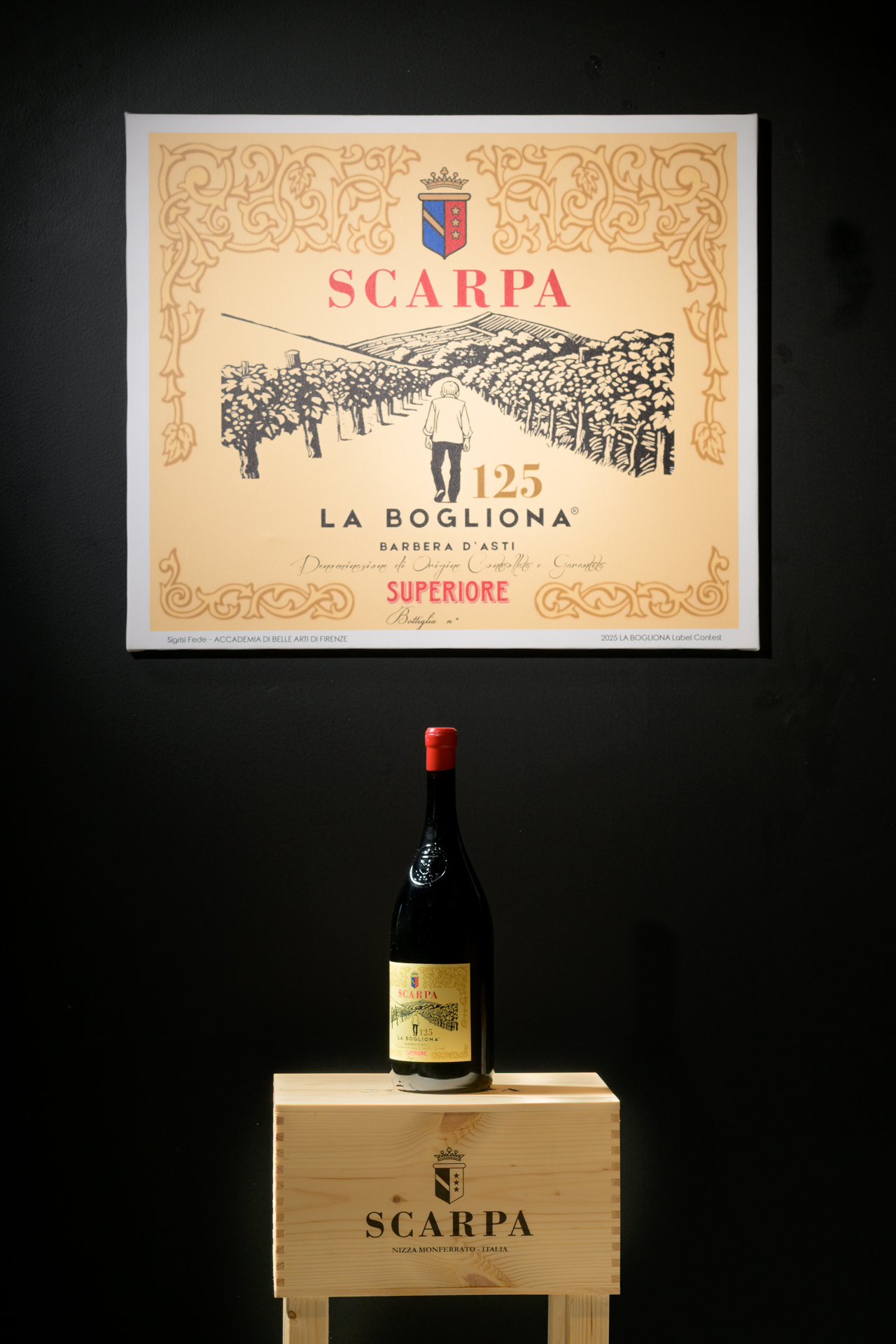
For a wine that knows how to wait, time is a promise. That belief inspired “La Bogliona Takes the Stage”, the creative contest that brought our 125th anniversary celebrations to a close.
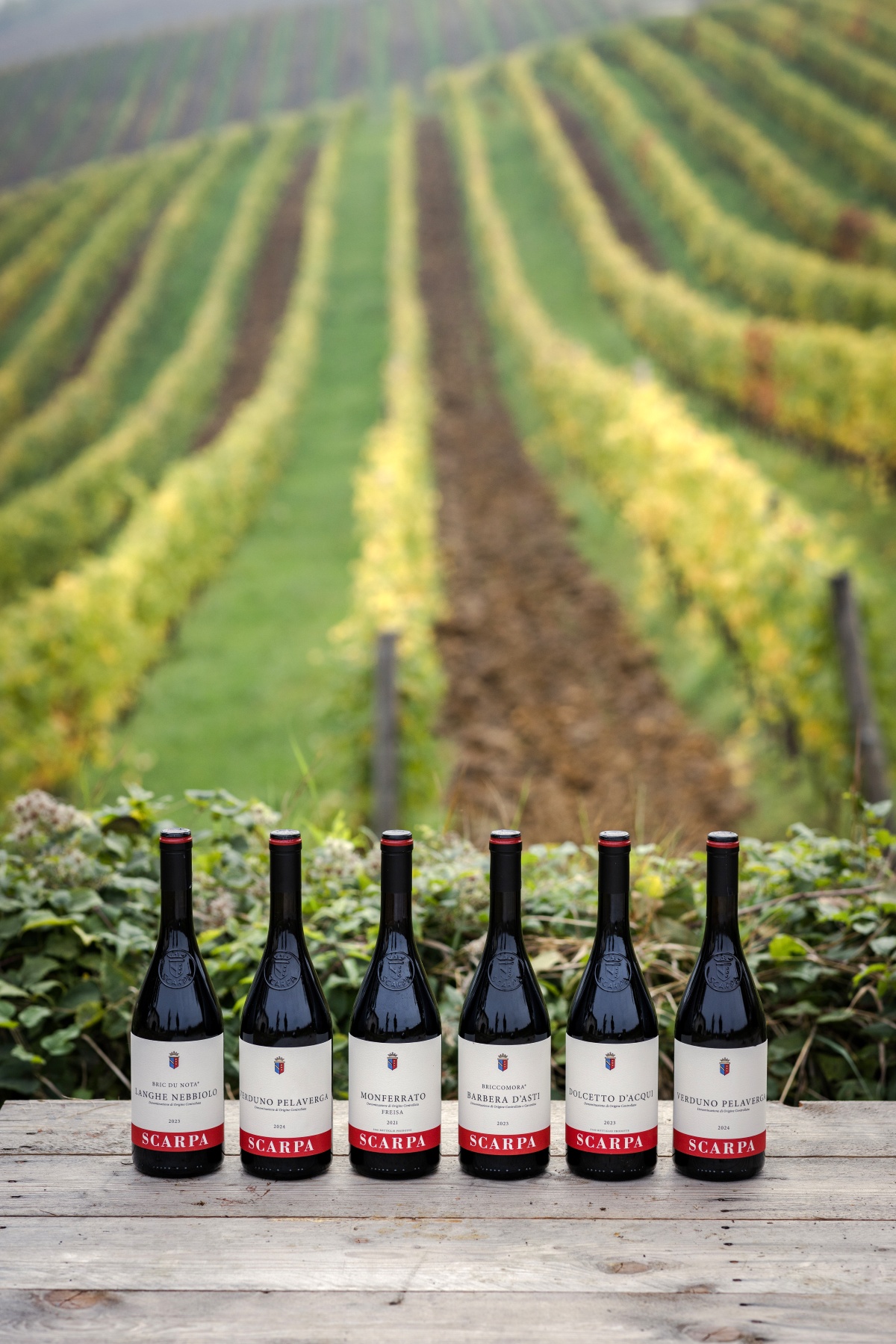
Carlo Castino knew this in the 1970s, when he invited researchers from the University of Pisa to study the soils and determine what to plant and where: lean sandy soils for some varieties, cooler marls for others. It was an early form of site selection, well before it became common practice. Today, we continue to vinify Piedmont’s native grapes as single varieties, convinced that this is the most honest way to preserve and communicate their character – each one carrying its own piece of the landscape.
Nebbiolo: The Nobility of Time
More than any other grape, Nebbiolo defines the identity of Piedmontese wine. It appears in written records as early as the 13th century, referred to as Nibiol and Nebiolium, already recognised as a grape of great quality. Its name has been linked to several origins: the autumn fog – nebbia in Italian – that accompanies its late harvest, the bloom on ripe berries, or the Latin nobilis, hinting at its aristocratic nature.
It is a demanding variety, requiring well-exposed calcareous clay soils, elevations between 200 and 450 metres, and a long growing season that often stretches into late October. Its thick, tannin-rich skins give wines structure and remarkable ageing potential, often drawing comparisons with Pinot Noir for complexity and longevity.
Today, around 75% of Nebbiolo production remains in Piedmont. In our vineyards in Monvigliero, Roncaglie and Canova, it produces wines of depth and clarity, where freshness meets fine tannins and aromas range from violet and cherry to spice and earth, evolving over time into notes of leather and tobacco.
Freisa: Nebbiolo’s Vibrant Counterpart
Freisa represents a more vibrant side of Piedmontese wine culture. It appears as early as 1517 in the customs records of Pancalieri, where it was already valued more highly than other grapes. Its name likely derives from fresia – strawberry – reflecting its colour and fruit-driven profile.
What makes Freisa especially interesting is its close genetic link to Nebbiolo: the two share around 75% of their DNA. This connection explains certain shared traits, including ageing potential, while highlighting clear stylistic differences. Where Nebbiolo builds complexity over time, Freisa shows a more immediate, energetic character.
On the nose, it offers notes of raspberry, cherry and strawberry, alongside floral hints of rose and violet. On the palate, it is fresh and lifted, with bright acidity and fine tannins. A subtle bitter edge on the finish is one of its defining features, along with a lively, almost visceral energy that makes it particularly well suited to richer Piedmontese dishes.
Barbera: From Everyday Wine to Piedmontese Icon
Barbera is the generous, accessible face of Piedmont. The earliest records date back to 1249, in a lease contract from Casale Monferrato that refers to viti barbesine. From the late 19th century onwards, it spread rapidly across the region, thanks to its adaptability and resilience.
Its defining trait is versatility: depending on where and how it is grown, Barbera can take on very different expressions. Its thick skins, rich in colour but low in tannins, give wines a deep hue and a supple structure, supported by naturally high acidity. This acidity is key to both its freshness in youth and its ability to age.
For decades, Barbera was the everyday wine of rural life. That identity long overshadowed its potential, until the 1980s, when a group of producers began to explore its capacity for greater depth and complexity. Carlo Castino had already noticed that, within a small three-hectare parcel, Barbera showed something different – something more. From that insight came La Bogliona, Scarpa’s first Barbera d’Asti Superiore and a turning point in its approach to ageing, along with I Bricchi, named after the estate itself.
Today, Scarpa’s Barbera spans a wide range, from fresher expressions like Briccomora to more structured and layered wines – a journey that has taken it from everyday wine to a recognised icon.
Ruchè: The Aromatic Voice of Monferrato
Ruchè is perhaps the most distinctive and least easily defined of Piedmont’s grape varieties, with a strong sense of place and a unique aromatic profile. Its origins remain uncertain: some trace it back to the 18th century, others consider it native to the hills between Castagnole Monferrato and Portacomaro. What is certain is that it has found its natural home in Castagnole, where it earned DOCG status in 1987, reserved exclusively for this area.
What sets Ruchè apart is its expressive aromatic profile. The nose is dominated by floral notes of rose, violet and geranium, layered with spice – black pepper, clove, cinnamon. On the palate, it is elegant, with fine, silky tannins, lively acidity and a long finish.
The result is a wine with a style of its own, capable of pairing across a wide range of cuisines – from blue cheeses to spiced meats, from Asian dishes to the traditional flavours of Monferrato.